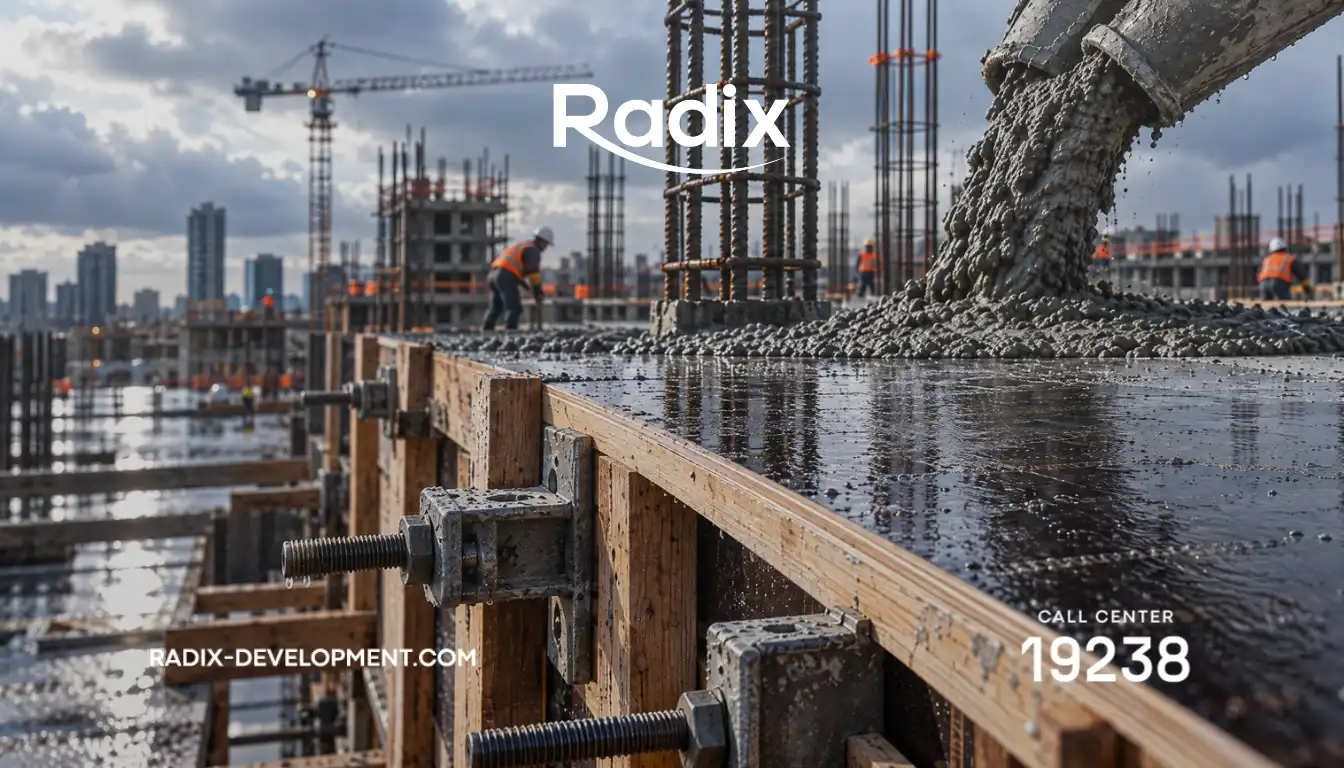
Film Faced Plywood Selection and Its Role in Concrete Formwork
At Radix Development, quality is not a final inspection—it begins with the decisions that shape every pour. Film faced plywood is part of the formwork system and can influence the consistency of the concrete surface. This guide explains how we assess the board, its condition and the surrounding system so the finish, safety and material value support the project standard from the outset.
What Film Faced Plywood Does
Film faced plywood is a plywood panel with a coated face intended for use in formwork. The surface in contact with fresh concrete can influence the appearance after stripping. A sound, clean and even face may support a more consistent finish, while damaged coating, rough repairs or poorly protected edges can affect both quality and service life.
The panel is only one part of the result. Support spacing, formwork stiffness, joint treatment, concrete mix and placement, vibration, release practice and stripping all contribute. A high-grade board cannot compensate for an under-designed or poorly maintained formwork assembly.
How Radix Development Sets the Quality Criteria
As project owner, Radix Development begins with the intended concrete finish, structural requirements, panel layout and expected site conditions. Before procurement, the project team reviews the proposed board documentation and checks that the product, dimensions and intended use align with the approved design and specifications.
Inspection focuses on the actual condition of each panel: surface coating, flatness, delamination, edge damage, deep scratches, contamination and signs of moisture exposure. Reused panels are assessed by condition, not by a claimed number of prior uses. Acceptance limits should be agreed before the first pour.
Plan Joints and Concrete Contact
Panel arrangement should be coordinated with the desired joint pattern and the geometry of the element. Tight, consistent joints help reduce grout leakage and unwanted fins. Where joints are visible by design, their spacing and alignment should be deliberate and coordinated with the architectural intent.
Use only a release agent approved for the project and compatible with the board and concrete finish. Apply it evenly in accordance with the manufacturer’s instructions. Excess product or an unsuitable substitute may mark the concrete, vary its appearance or shorten panel life.
Reuse With Inspection
Careful cleaning, flat storage and protection from standing water can help preserve panels for possible reuse. Before each cycle, inspect the coating, edges and flatness again. Reuse is acceptable only when the board remains suitable for the specified finish and formwork system; quality and safety take priority over extending a panel’s service life.
Frequently Asked Questions
Does film faced plywood guarantee a smooth concrete finish ?
No. It is one component of a coordinated system. Formwork design, panel condition, joints, release agent, concrete placement, vibration and stripping also affect the result.
Can a previously used panel be used again ?
Possibly, after inspection confirms that its surface, edges and flatness remain suitable for the project requirements.
What should be reviewed before purchase ?
The intended use, technical documentation, panel condition criteria, support design, joint layout, release method and the project’s acceptance standard.
Quality as the Standard
For Radix Development, a quality concrete finish is never the result of one material alone. It comes from selecting suitable film faced plywood, designing the formwork correctly and controlling every stage from inspection to reuse. By setting clear criteria and verifying them on site, we pursue the highest attainable quality and greater confidence in the finished structure.
Discuss your project requirements with Radix Development and learn how our team approaches quality-led material selection.